
Data Diet: Can Trimming PET/CT Datasets Enhance Lesion Segmentation?
MICCAI 2024 autoPET III Challenge — Data-Centric Track, 2024
Key contributions
- A data-centric recipe that prunes the easiest training samples (by model loss) and retrains from scratch, cutting false positives on PSMA-PET.
- Improvements over the baseline in both false-negative volume and Dice on the autoPET III preliminary test set.
- Open code and pre-trained models for the autoPET III data-centric track.
How it works
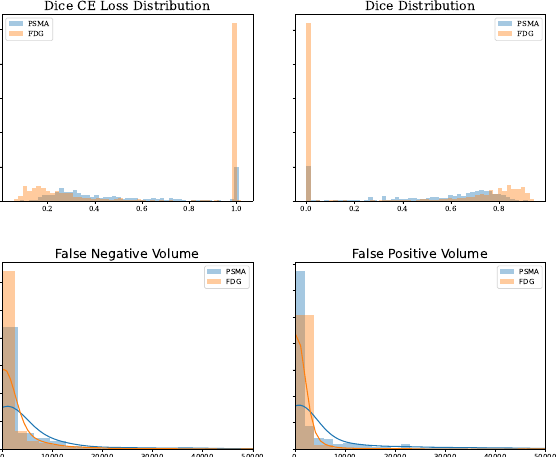
In this work, we describe our approach to compete in the autoPET3 datacentric track. While conventional wisdom suggests that larger datasets lead to better model performance, recent studies indicate that excluding certain training samples can enhance model accuracy. We find that in the autoPETIII dataset, a model that is trained on the entire dataset exhibits undesirable characteristics by producing a large number of false positives particularly for PSMA-PETs. We counteract this by removing the easiest samples from the training dataset as measured by the model loss before retraining from scratch. Using the proposed approach we manage to drive down the false negative volume and improve upon the baseline model in both false negative volume and dice score on the preliminary test set. Code and pre-trained models are available at github.com/alexanderjaus/autopet3_datadiet.
Citation
Jaus, Alexander; Reiß, Simon; Kleesiek, Jens; Stiefelhagen, Rainer; . (2024). "Data Diet: Can Trimming PET/CT Datasets Enhance Lesion Segmentation?." MICCAI 2024 autoPET III Challenge — Data-Centric Track.